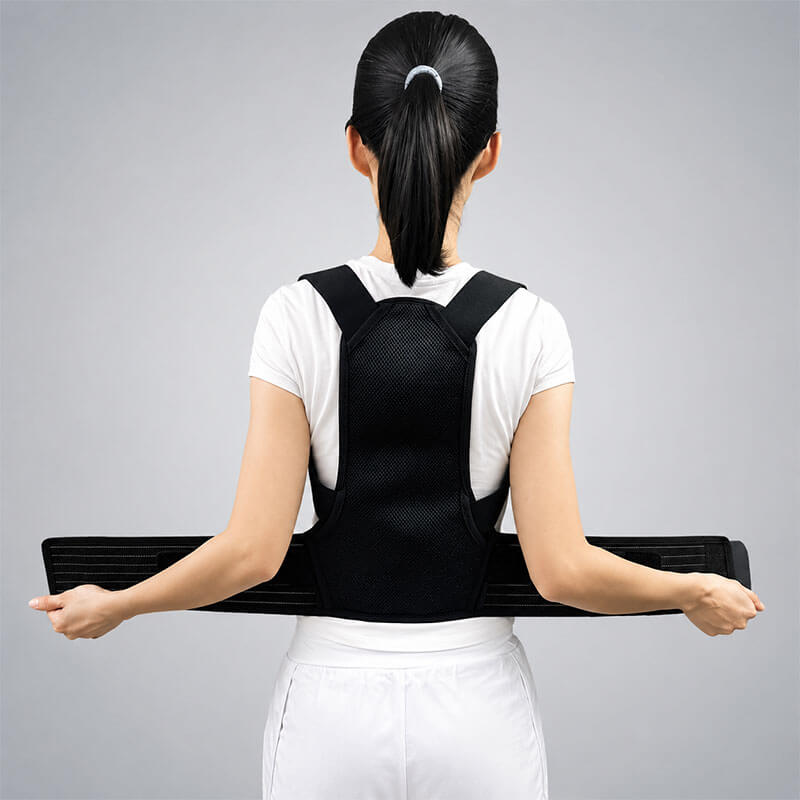

Say No to Slouching and Text Neck! Do Posture Correctors Really Work? Insights and Advice from a Professional Manufacturer
In today’s digital age, our lives revolve around screens. Whether you are an office worker logging long hours at a desk or someone constantly glued to a smartphone, it is easy to unintentionally develop a "slouching posture" or "text neck" (forward head posture). Not only does this make you look tired and older, but over time, it can also lead to chronic shoulder and neck pain, as well as muscle imbalances.
As a result, the trend of using a "Posture Corrector" has skyrocketed. But do they actually work? Or are they just a marketing gimmick?
As an experienced orthopedic support developer and manufacturer, we are here to break down the real effectiveness of posture correctors from an ergonomic and material structure perspective, and provide you with professional guidance on how to use them correctly!
1. How Do Posture Correctors Work? Can They Actually "Cure" Slouching?
A common misconception is that wearing a posture corrector will instantly and automatically straighten your bones.
A Manufacturer's Reality Check: A posture corrector is a "helper and a reminder," not a medical surgery. While it cannot directly alter your skeletal structure on its own, it plays two critical roles:
- Providing Physical Reminders: When you wear a posture corrector and begin to slouch, hunch your shoulders, or crane your neck forward, the straps tighten and create resistance. This physical pull "reminds" your brain: "Hey, you're slouching again! Pull your shoulders back."
- Assisting Muscle Memory: Through continuous reminders, it helps your upper back muscles (especially the rhomboids and trapezius) retrain and stay in the correct alignment, gradually building healthy muscle memory.
Therefore, they do work! But the key is that "it helps you build a good habit," rather than doing the physical work for your muscles.
2. Why Do Some People Find It Ineffective? 3 Common Mistakes
Throughout our product testing as a manufacturer, we have found that when users feel a posture corrector isn't working, it is usually due to these common mistakes:
❌ Mistake 1: Over-tightening the Straps
Many people pull the straps as tight as possible hoping for instant results. This forces the shoulders too far back, compresses the nerves and blood vessels in the armpits (causing arm numbness), and prevents the muscles from engaging. Consequently, the muscles become even weaker.
❌ Mistake 2: Wearing It All Day Long
Relying on a posture corrector for extended periods allows your upper back muscles to become "lazy" since the brace is doing all the support work. Once you take it off, your posture might slump even worse due to a lack of muscle engagement.
❌ Mistake 3: Relying Solely on the Brace Without Changing Habits
If you wear a posture corrector but continue to slouch lazily in your chair, you are simply fighting against the resistance of the straps. This will not fix text neck and can potentially lead to muscle strain.
3. Manufacturer's Guide: How to Use a Posture Corrector Correctly
To effectively say goodbye to slouching and text neck, follow a "progressive" approach:
- Build Up Time Gradually: During the first week, wear it for just 15 to 30 minutes a day. Once your body adapts, gradually increase the duration to 1 or 2 hours daily. Never wear it while sleeping.
- Keep the Tension Moderate: When worn, your shoulders should rest naturally and your back should be straight. You should still feel the elasticity of the straps when relaxed, rather than being forcefully pulled to the point of discomfort.
- Combine with Core and Back Exercises: While using a posture corrector, incorporate simple chest expansion stretches and back-strengthening exercises. "External reminders (the brace) + Internal strengthening (the muscles)" is the only ultimate solution to cure slouching.
4. Golden Standards for Choosing a Posture Corrector: Materials and Design Matter
With posture correctors on the market ranging widely in price, we recommend looking closely at manufacturing and manufacturing details when choosing or developing a product:
- High Breathability and Skin-Friendly Fabrics: Posture correctors are worn close to the body and often touch the skin directly. Selecting products made with premium high-elastic fabrics or porous breathable mesh ensures comfort and prevents irritation or overheating during warmer days.
- Ergonomic Pressure Relief: A well-engineered design features thickened padding around the underarms and shoulders to prevent the straps from chafing or digging into the skin during movement.
- Adjustable Support Levels: High-quality hook-and-loop fasteners (Velcro) or adjustable buckles are essential, allowing users of different body types to easily customize the support tension to their liking.